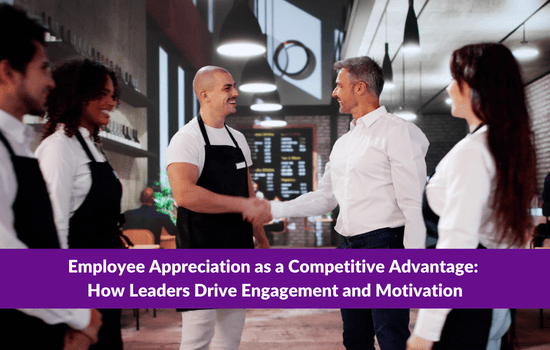
Employee appreciation is no longer a soft initiative; it is a strategic advantage that directly impacts performance, retention, and culture. When a leader applies emotional intelligence to employee appreciation, it strengthens engagement, boosts motivation, and reinforces trust across the organization. Research consistently shows that employees who feel genuinely valued are more committed, more productive, and far more likely to stay, making appreciation a powerful driver of sustainable business success.
The Power of Appreciation: How Employee Recognition Boosts Engagement
Employee appreciation is a powerful driver of engagement, performance, and organizational success. Research consistently shows that organizations with strong recognition cultures outperform their peers across key business metrics, including retention, productivity, and employee commitment.
According to Gallup (2024), employees who feel adequately recognized are 45% less likely to leave their organization, clearly linking appreciation to both employee retention and motivation. Recognition, when done well, is not simply a morale booster; it is a measurable business strategy.
Further reinforcing this, Harvard Business Review (2023) reports that meaningful recognition increases motivation and performance more effectively than financial incentives alone. When employee appreciation is delivered consistently and intentionally, it strengthens engagement, reinforces trust, and positions recognition as a true competitive advantage in today’s talent-driven marketplace.
Why Emotionally Intelligent Leadership Makes Appreciation Effective
Leaders who demonstrate emotional intelligence understand that employees are not just contributors to the business; they are the business. How employees feel at work directly influences how they perform, collaborate, innovate, and serve customers.
Appreciation is one of the most powerful and often underutilized tools available to leaders. Organizations that intentionally invest in recognition, trust, and workplace culture experience higher productivity, stronger collaboration, and greater resilience during times of change. McKinsey & Company found that organizations with healthy, inclusive cultures where appreciation is embedded are significantly more likely to outperform competitors financially.
When employees feel seen, valued, and respected, they are more engaged and more willing to contribute discretionary effort. This emotional connection fuels innovation, strengthens teamwork, and enhances customer satisfaction, key ingredients for sustainable, long-term success.
How Important Is Employee Appreciation for Your Business?
The answer is simple: it is crucial.
Employee appreciation positively impacts morale, motivation, retention, teamwork, customer satisfaction, and overall organizational performance. Gallup continues to show that engaged employees, those who feel valued and recognized, are more productive and significantly less likely to experience burnout.
Recognition also supports psychological safety. Google's Project Aristotle confirms that psychological safety is the strongest predictor of high-performing teams, and appreciation plays a central role in creating environments where employees feel safe to contribute ideas, ask questions, and take risks.
How Leaders Invest in Employees
Influential leaders build positive workplace cultures by leading with emotional intelligence in leadership. These leaders consistently practice self-awareness, empathy, and social awareness, skills that enable them to build strong relationships and navigate daily challenges effectively.
Leaders who invest in their employees demonstrate appreciation through their actions, communication, and decision-making. Research from Harvard Business Review highlights that emotionally intelligent leaders are more effective at fostering trust, sustaining engagement, and aligning teams with organizational mission, vision, and values.
Compassionate leadership plays a critical role here. Compassionate leaders recognize effort, acknowledge emotions, and support development, behaviours that directly enhance employee retention and motivation. Employees who feel genuinely valued are more committed, more productive, and more likely to go above and beyond in their roles.
The Emotional Intelligence Advantage
Leaders with advanced emotional intelligence acknowledge others' feelings and address challenges with authenticity and care. Their empathy and consistency create a sense of belonging and loyalty that employees rarely forget. Gallup notes that employees who feel emotionally connected to their leaders are significantly more engaged and motivated.
This emotional connection is what transforms appreciation into a true competitive advantage. Employees are drawn to leaders who make them feel valued, leaders they trust, respect, and want to support. When appreciation is authentic, it strengthens relationships and fuels performance.
Simple Ways to Show Employee Appreciation
Research shows that consistent, everyday recognition matters more than occasional grand gestures (Gallup, 2024). Emotionally intelligent leaders practice appreciation through simple, intentional actions:
-
Listen actively and seek input
-
Keep employees informed and involved
-
Show genuine care for people, not just results
-
Practice empathy in challenging moments
-
Lead with compassion, even during difficult conversations
-
Demonstrate humility and acknowledge contributions
-
Recognize effort, not just outcomes, to support growth and resilience
These behaviours reinforce trust and strengthen workplace culture and engagement, creating teams that feel valued and motivated.
Employee appreciation is one of the most influential tools a leader has to shape culture, performance, and loyalty. When appreciation is guided by emotional intelligence, it becomes more than recognition; it becomes a catalyst for deeper engagement, stronger relationships, and sustained motivation.
Organizations that intentionally invest in employee appreciation create environments where people feel valued, supported, and inspired to contribute their best work. This emotional connection fuels trust, collaboration, and resilience, positioning appreciation as a true competitive advantage.
In today’s talent-driven marketplace, businesses that lead with emotional intelligence and prioritize employee appreciation will not only attract and retain top talent, but they will outperform. Elevate your organization by investing in your people. Explore consulting opportunities, emotional intelligence training, or practical strategies in The Power of Emotion to strengthen employee motivation, engagement, and long-term success.
This article was originally published on February 8, 2020, and has been updated (February 2026).
More Motivational Reads Here »
How Emotionally Intelligent Are You?
Sign up for Linda’s monthly tips to build your Emotional Intelligence and reduce Emotional Hijacking!