Conflict is inevitable in both our personal and professional lives, especially within every workplace relationship. What determines whether conflict strengthens or damages those relationships is our ability to practice productive conflict resolution. Developing emotional intelligence, strengthening self-awareness, and using effective communication are not simply “soft skills”; they are essential drivers of trust, collaboration, performance, and leadership success.
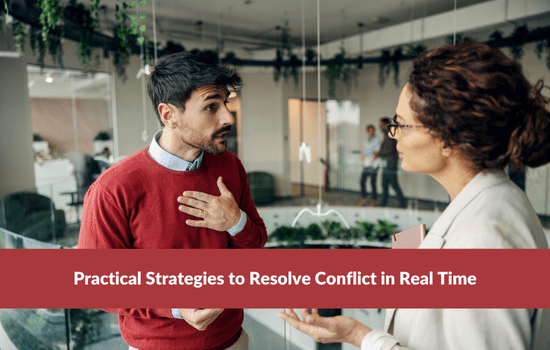
In-the-Moment Conflict Resolution: Strategies for Swift Resolution
Research consistently shows that organizations with emotionally intelligent leaders experience stronger collaboration, higher employee engagement, and reduced turnover. According to research popularized by Daniel Goleman, emotional intelligence accounts for nearly 90% of the difference between average and top-performing leaders in senior roles. In other words, technical expertise may get someone promoted, but emotional intelligence determines sustained success. When handled well, conflict builds trust and clarity. When mishandled, it erodes productivity, morale, and retention.
The Real Cost of Unresolved Conflict
Workplace conflict is not just uncomfortable; it’s expensive.
A study by CPP Inc. found that employees spend an average of 2.8 hours per week resolving conflicts. That equates to billions of dollars in lost productivity annually in North America alone. Additionally, research from Gallup shows that employees who experience ongoing interpersonal tension are significantly less engaged, and disengagement directly impacts profitability, customer loyalty, and safety outcomes.
The takeaway? Strong conflict resolution skills are a strategic advantage, not merely a relational nicety.
How Emotional Intelligence Strengthens Workplace Relationships
Your ability to manage workplace relationships is directly tied to your level of emotional intelligence. When we understand our emotions and recognize emotional cues in others, we prevent escalation and create space for thoughtful dialogue.
Three core competencies make this possible:
-
Self-awareness allows us to recognize emotional triggers, biases, and unmet expectations before they spill into our tone or behaviour. Research from Harvard Business Review highlights self-awareness as one of the most critical capabilities for effective leadership and decision-making. Without self-awareness, we react. With it, we respond strategically.
-
Self-management enables us to regulate emotional responses under pressure. Leaders who demonstrate composure during tension create psychological safety, a key predictor of team effectiveness identified in research from Google’s Project Aristotle study. Calm regulation strengthens effective communication, even during disagreement.
-
Social awareness builds empathy. When we understand what others may be experiencing, we shift from confrontation to collaboration. This protects and strengthens workplace relationships, even in moments of friction. When these competencies operate together, conflict resolution becomes constructive rather than combative.
Repair Conflict in Real Time
The sooner you address a breakdown in effective communication, the easier it is to repair.
Neuroscience research shows that when conflict is left unresolved, stress hormones like cortisol remain elevated, impairing cognitive function and decision-making. Addressing issues promptly reduces emotional escalation and prevents narrative-building or assumption-making. Real-time conflict resolution requires courage, but it preserves clarity, respect, and trust.
Stepping Out of Your Comfort Zone
A client once shared that his instinct in conflict was to avoid. He feared that addressing the tension would escalate the situation. However, over time, he discovered that avoidance prolonged discomfort and weakened his workplace relationships.
As he strengthened his emotional intelligence and leaned into discomfort with greater self-awareness, he gained confidence. Conversations became more direct. Tension decreased. Trust increased.
Research consistently shows that teams with higher emotional intelligence demonstrate stronger collaboration, better stress management, and improved performance. What feels uncomfortable in the short term often produces long-term relational strength.
Five Practical Strategies for Real-Time Conflict Resolution
When a conversation begins to derail, apply these strategies to restore effective communication:
-
Pause and regulate first. Engage your self-awareness before responding.
-
Assess your contribution. Take responsibility for tone, assumptions, or defensiveness.
-
Release blame. Progress in conflict resolution requires a forward focus.
-
Clarify your intention. Ask: What outcome do I want, understanding, alignment, or repair?
-
Seek empathy and common ground. Acknowledge difficulty and invite perspective. This strengthens workplace relationships.
The Business Case for Emotional Intelligence in Conflict
Organizations that prioritize emotional intelligence training report measurable returns:
-
Improved employee engagement
-
Reduced turnover
-
Stronger leadership effectiveness
-
Enhanced collaboration
-
Healthier workplace relationships
When employees master self-awareness and practice consistent, effective communication, conflict becomes a catalyst for innovation rather than a barrier to productivity.
Conflict does not have to damage relationships; it can strengthen them when approached with skill and intention. By developing emotional intelligence, strengthening self-awareness, and committing to proactive conflict resolution, you elevate both individual performance and organizational health.
The research is detailed: leaders and teams who prioritize emotional intelligence consistently outperform those who rely solely on technical ability. Strong self-awareness, effective communication, and productive conflict resolution are essential skills for building trust, strengthening every workplace relationship, and creating healthier, more resilient teams. When organizations invest in these capabilities, they protect productivity, improve collaboration, and drive measurable business results. If you or your team are ready to strengthen emotional intelligence and develop more effective conflict resolution strategies, Marshall Connects offers practical, research-backed training and consulting programs designed to create lasting impact. To further explore practical strategies for understanding and managing emotions, discover The Power of Emotion.
This article was originally published on August 10, 2019, and has been updated (May 2026).
More Motivational Reads Here »
How Emotionally Intelligent Are You?
Sign up for Linda’s monthly tips to build your Emotional Intelligence and reduce Emotional Hijacking!