
Burnout, emotional intelligence, self-awareness, stress management, and workplace well-being are closely connected. Burnout rarely happens overnight. It often develops gradually, with small changes in our emotions, energy, motivation, behaviour, and reactions that we may dismiss as "just stress" or a particularly busy period. Developing emotional intelligence and strengthening self-awareness can help us recognize these warning signs earlier, take action through better stress management, and protect our workplace well-being before exhaustion becomes overwhelming.
Recognizing Burnout Before It Escalates: How to Spot the Small Warning Signs
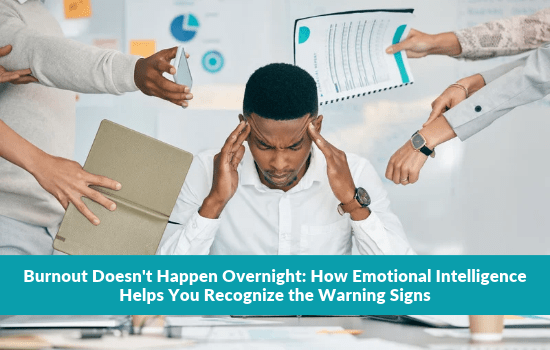
Most of us experience stress from time to time. A demanding project, difficult conversation, long hours, personal responsibilities, or a period of change can temporarily drain our energy.
The concern begins when temporary stress becomes ongoing stress without adequate recovery.
Burnout can develop when we continually give without taking time to recharge. We may tell ourselves that we need to work harder, get through the busy period, or wait for things to settle down. But when those demands continue, the warning signs can become increasingly difficult to ignore.
You may notice:
-
Feeling emotionally or physically exhausted.
-
Becoming increasingly frustrated or impatient.
-
Losing motivation or enthusiasm.
-
Difficulty concentrating or making decisions.
-
Feeling disconnected or disengaged from your work.
-
Becoming more negative or cynical.
-
Having less patience with colleagues, friends, or family.
-
Struggling to enjoy activities you normally find rewarding.
-
Feeling that even small responsibilities have become overwhelming.
These signs don't necessarily mean you are experiencing burnout. However, they can be signals that something needs your attention.
The earlier we notice the signals, the more opportunity we have to respond.
How Can Emotional Intelligence Help?
Emotional intelligence gives us the ability to recognize, understand, and manage our emotions while also understanding the emotions of others. One of the most important emotional intelligence skills in recognizing burnout is self-awareness.
Self-awareness allows us to notice changes in ourselves before they become impossible to ignore. It encourages us to stop and ask:
-
Why am I feeling this way?
-
What has changed?
-
What is my body, mind, and behaviour telling me?
Without self-awareness, we may normalize exhaustion, frustration, irritability, or disengagement. We may continue operating as though everything is fine while our emotional and physical resources are becoming depleted.
With stronger emotional intelligence, we can become more intentional about recognizing what we are experiencing and deciding what needs to change.
Pay Attention to Changes in Your Behaviour
Burnout isn't always obvious. Sometimes it shows up as changes in how we behave.
Perhaps you're normally patient, but you're becoming easily irritated. Maybe you usually enjoy collaborating with others, but you're increasingly withdrawing. You might find yourself putting off tasks, making more mistakes, struggling to concentrate, or feeling overwhelmed by responsibilities that previously felt manageable.
These changes are worth noticing.
Self-awareness isn't about judging yourself. It's about becoming curious about yourself. Instead of asking, "What's wrong with me?" ask: "What is different about me lately?" That simple change in perspective can be powerful.
What Is Draining Your Energy?
One of the most valuable questions we can ask ourselves is:
"What is draining my energy?"
Is it workload? Lack of control? Constant interruptions? Difficult relationships? Unrealistic expectations? A lack of recognition? Not enough recovery time?
Sometimes the answer is obvious. Other times, we need to step back and examine our patterns. Effective stress management begins with understanding what is creating the stress.
We cannot always remove the source of stress, but we can often change how we respond, set healthier boundaries, ask for support, or identify what needs prioritizing.
What Are You Tolerating That Needs to Change?
Another important reflection question is:
"What am I tolerating that needs to change?"
Perhaps you're consistently working through lunch. Maybe you're answering emails late into the evening. You may be saying yes to everything because you don't want to disappoint others. Or perhaps you have been avoiding a conversation that needs to happen.
Small compromises can accumulate.
When we continually ignore our own needs, the impact can eventually affect our energy, relationships, motivation, and workplace well-being. Setting boundaries isn't about caring less. Sometimes it is about creating the conditions that allow us to continue performing well without sacrificing our well-being.
Where Do You Need Support?
We often associate strength with handling everything ourselves. But asking for support is not a weakness. It is an important part of emotional intelligence and effective stress management.
Consider:
- Who can I talk to honestly?
- What support do I need?
- Is there someone who can help me prioritize?
- Do I need to delegate?
- Is there a conversation I need to have?
- Would coaching or professional support help me gain perspective?
Recognizing that you need support requires self-awareness. Acting on that awareness requires courage.
Protecting Workplace Well-Being
Organizations play an important role in preventing and addressing burnout. Leaders can help create an environment where people feel comfortable speaking about workload, expectations, stress, and support without fear of judgment. But individuals also have a role.
Protecting workplace well-being begins with paying attention to our own warning signs and taking responsibility for what we can influence.
That may mean taking meaningful breaks, setting boundaries, prioritizing important work, having honest conversations, using available resources, or making changes before exhaustion becomes the norm.
Well-being shouldn't be something we think about only after we reach our breaking point.
Five Questions Worth Asking Yourself
Take a few minutes and honestly answer these questions:
-
What is draining my energy?
-
What emotions have I been experiencing more frequently?
-
What am I tolerating that needs to change?
-
Where do I need support?
-
What is one thing I can do today to improve my well-being?
Your answers may reveal something you haven't consciously acknowledged. That's the power of self-awareness.
Don't Wait for Burnout to Get Your Attention
Burnout doesn't happen overnight, and neither does prevention. It begins with noticing.
When we strengthen our emotional intelligence, we become better able to recognize changes in our emotions, behaviours, motivation, and energy. Self-awareness helps us identify what is happening; Stress management helps us respond more effectively; and intentional choices can protect our workplace well-being before burnout takes hold.
Don't wait until exhaustion forces you to pay attention.
Listen to the warning signs. Pause. Reflect. Ask for support. Make the changes you can. Your well-being is worth noticing and protecting.
Developing emotional intelligence is an ongoing journey. Through Emotional intelligence assessments and coaching, Marshall Connects can help you strengthen self-awareness, recognize the warning signs of burnout, and develop practical stress management strategies that support resilience, relationships, and well-being in the workplace. Sometimes the first step toward addressing burnout is recognizing that something needs to change. For additional guidance, explore Linda Marshall’s The Power of Emotion, a practical resource for better understanding and managing your emotions.
More Motivational Reads Here »
How Emotionally Intelligent Are You?
Sign up for Linda’s monthly tips to build your emotional intelligence and reduce emotional hijacking!