
That voice in your head, your internal dialogue, has more influence than you may realize. Negative self-talk can quietly undermine confidence, increase stress, and limit both personal and professional growth. Through emotional intelligence and greater self-awareness, we can begin to recognize these unhelpful thought patterns and intentionally shift toward a more positive mindset. Over time, this strengthens mental resilience, improves emotional well-being, and helps us respond to challenges with greater clarity, confidence, and control.
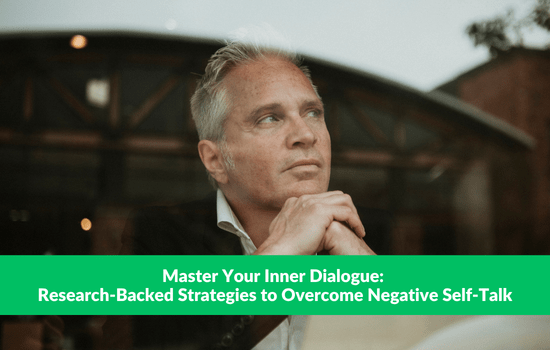
Change Your Inner Dialogue: Strategies to Build Confidence, Mental Resilience, and a Positive Mindset
Research in psychology and neuroscience (Source: APA) confirms what many of us experience daily: our thoughts shape our emotions, and our emotions influence our behaviour, productivity, and relationships. Learning to master your inner dialogue is not just self-help advice; it’s a performance strategy.
The Science Behind Your Internal Voice
There is a strong connection between what we think and how we feel physically and emotionally. According to research from the Cleveland Clinic, persistent negative thinking patterns can increase stress hormones, elevate blood pressure, and weaken immune response. In other words, negative self-talk doesn’t just affect your mood; it affects your body.
Our internal voice runs almost constantly. We coach ourselves (“Speak up”), criticize ourselves (“That wasn’t good enough”), or replay situations over and over. Because this mental dialogue feels automatic, we often fail to notice its impact.
Psychologist Ethan Kross, author of Chatter, explains that unmanaged inner dialogue can amplify emotional distress and impair decision-making. However, when regulated effectively, it becomes a tool for focus and growth.
This is where emotional intelligence becomes critical. With greater self-awareness, we can recognize when our thoughts are becoming distorted and choose to redirect them toward a more balanced, constructive narrative.
Why Regulating Your Self-Talk Matters
Our emotional state is largely influenced by our thoughts. When unmanaged, negative thinking can hijack our attention, exaggerate setbacks, and prolong emotional discomfort.
Research published by the American Psychological Association shows that cognitive reframing, consciously shifting how we interpret events, reduces anxiety and improves coping skills. This is a core component of building mental resilience.
When we strengthen emotional intelligence, we gain the ability to pause between stimulus and response. That pause allows us to ask:
-
Is this thought accurate?
-
Is it helpful?
-
What would a more balanced perspective sound like?
Regulating negative self-talk is not about ignoring challenges; it’s about responding to them with a constructive and grounded positive mindset.
What Triggers Negative Self-Talk?
We all experience negative self-talk occasionally. It becomes harmful when it becomes habitual. Common triggers include:
-
Social isolation
-
Unresolved personal or professional conflict
-
Chronic stress
-
Lack of self-care
-
Surrounding yourself with consistently negative influences
Research from Harvard Medical School indicates that chronic stress and rumination are closely linked to anxiety and depression. When we isolate ourselves, our inner dialogue can become our loudest and sometimes harshest companion.
Strengthening self-awareness helps us identify patterns: when does my self-talk turn negative? After criticism? During fatigue? Under pressure? Awareness is the first step toward change.
The Cost of Negative Self-Talk on Performance
Unchecked negative self-talk affects motivation, productivity, and leadership effectiveness. Studies on performance psychology suggest that athletes and executives who practice constructive self-talk demonstrate greater persistence and improved outcomes under pressure.
Research highlighted in the Harvard Business Review shows that leaders who cultivate emotional regulation and optimism achieve stronger team engagement and better results. A leader’s internal dialogue directly influences external communication.
Developing emotional intelligence and a consistent positive mindset strengthens both personal effectiveness and professional impact.
Practical Strategies to Strengthen Mental Resilience
If you want to reduce negative self-talk, consider these research-backed strategies:
- Name the Voice: Label your inner critic. Creating psychological distance reduces emotional intensity and builds mental resilience.
- Practice Cognitive Reframing: Ask, “What else could be true?” This builds self-awareness and challenges distorted thinking.
- Replace Absolutes: Eliminate words like “always” and “never.” These amplify negativity and limit growth.
- Strengthen Emotional Regulation: Pause before reacting. This is a core pillar of emotional intelligence.
- Surround Yourself with Positive Influences: Environment matters. Exposure to constructive, solution-focused individuals reinforces a healthier, positive mindset.
Over time, these small adjustments retrain your brain. Neuroplasticity research (Source: Cleveland Clinic) shows that repeated thought patterns strengthen neural pathways, meaning you can literally rewire habitual negative self-talk.
Your Thoughts Shape Your Future
Mastering your internal dialogue is one of the most powerful investments you can make in yourself. By strengthening emotional intelligence, cultivating deeper self-awareness, and intentionally replacing negative self-talk with a balanced and constructive positive mindset, you build lasting mental resilience.
The research is clear: your inner dialogue directly influences stress levels, decision-making, performance, and long-term well-being. Negative self-talk can quietly shape how we see ourselves, respond to challenges, and pursue opportunities. But through emotional intelligence and greater self-awareness, we can learn to interrupt unhelpful thought patterns, develop a more positive mindset, and strengthen mental resilience. When we learn to regulate our thoughts, we improve our ability to regulate emotions, and that shift can transform both our personal lives and leadership effectiveness.
If you’re ready to strengthen these skills, Marshall Connects offers emotional intelligence assessments and coaching designed to help individuals build practical self-management strategies that enhance confidence, clarity, productivity, and emotional well-being. To further explore practical strategies for understanding and managing emotions, discover The Power of Emotion.
This article was originally published on June 15, 2019, and has been updated (May 2026).
More Motivational Reads Here »
How Emotionally Intelligent Are You?
Sign up for monthly tips to build your Emotional Intelligence and reduce Emotional Hijacking!